


Iyengar Yoga is a style of yoga that focuses on alignment, precision and mindful movement.
With carefully guided postures and supportive yoga props, students can develop greater awareness of their body and movement.
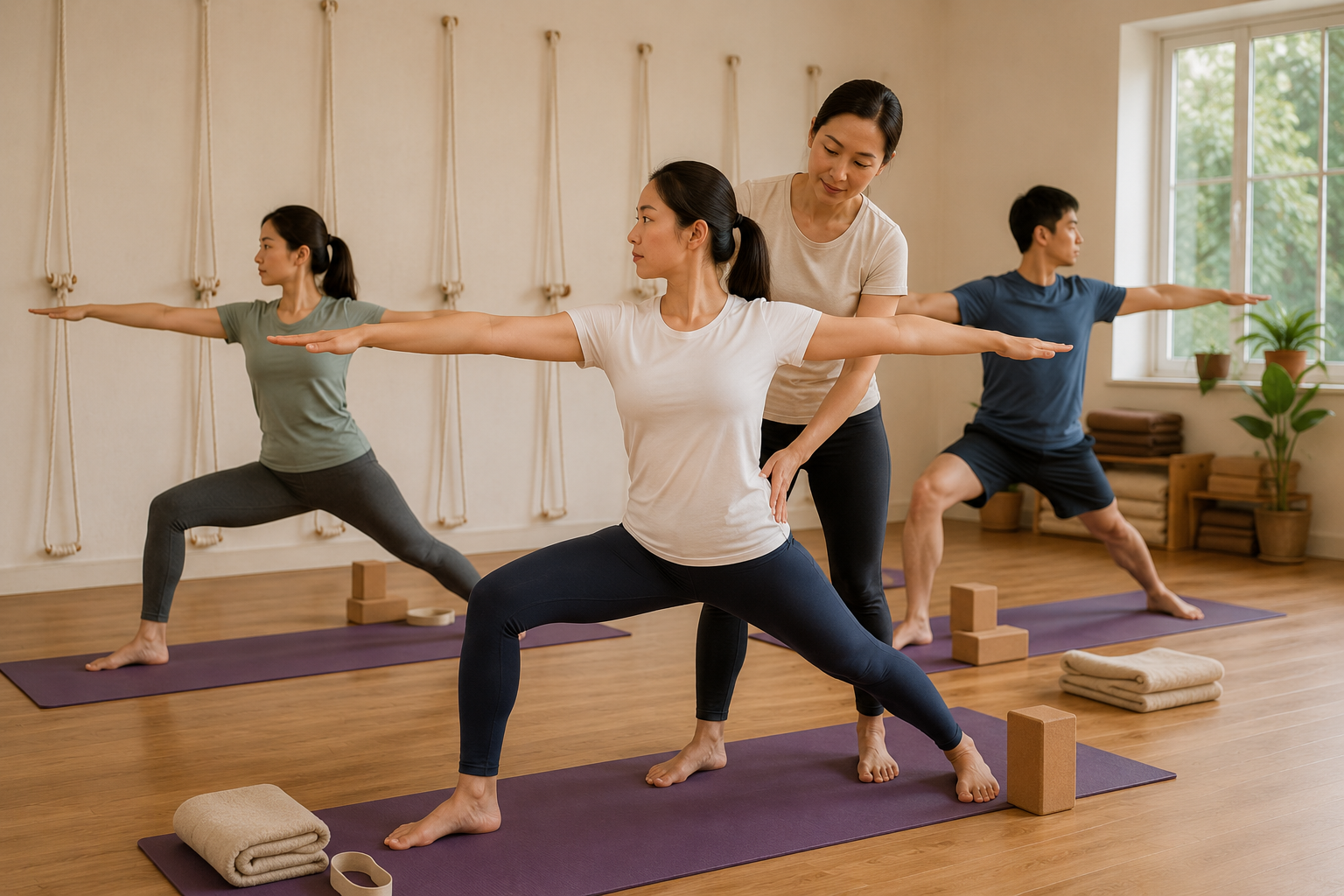
Have you ever wanted to try yoga but were unsure where to begin?
Iyengar Yoga places particular emphasis on correct alignment, precision and awareness when performing yoga postures. Yoga props such as blocks, straps, blankets and bolsters may also be used to support students during their practice.
But what exactly makes Iyengar Yoga different from other styles of yoga, and is it suitable for beginners?
Let’s explore the fundamentals of this structured and mindful approach to yoga.
Understanding the Practice
What Is Iyengar Yoga?
Iyengar Yoga is a style of yoga developed by B. K. S. Iyengar. It places particular emphasis on correct alignment, precision and awareness when performing yoga postures.
Rather than rushing through a series of poses, Iyengar Yoga encourages students to take time to understand each posture and develop greater awareness of their body.
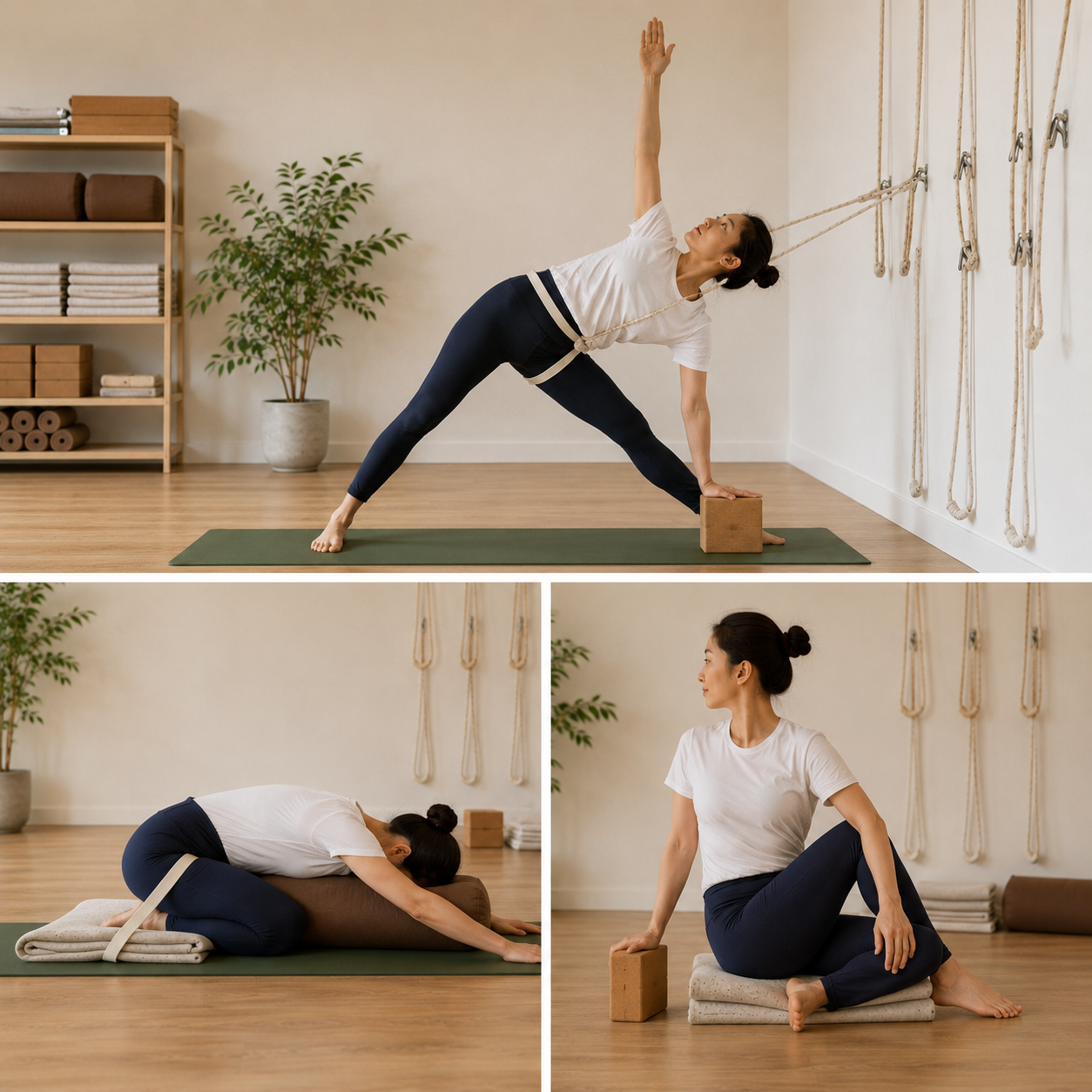
Example Posture of Iyengar Yoga.
Iyengar Yoga encourages students to slow down, observe and understand how they move.
A Structured Approach
What Makes Iyengar Yoga Different?
One of the key characteristics of Iyengar Yoga is its focus on alignment and precision. Students are guided to understand how different parts of the body work together when performing a posture.
The use of yoga props can also provide additional support during practice. These props may help students explore postures safely and make certain positions more accessible.
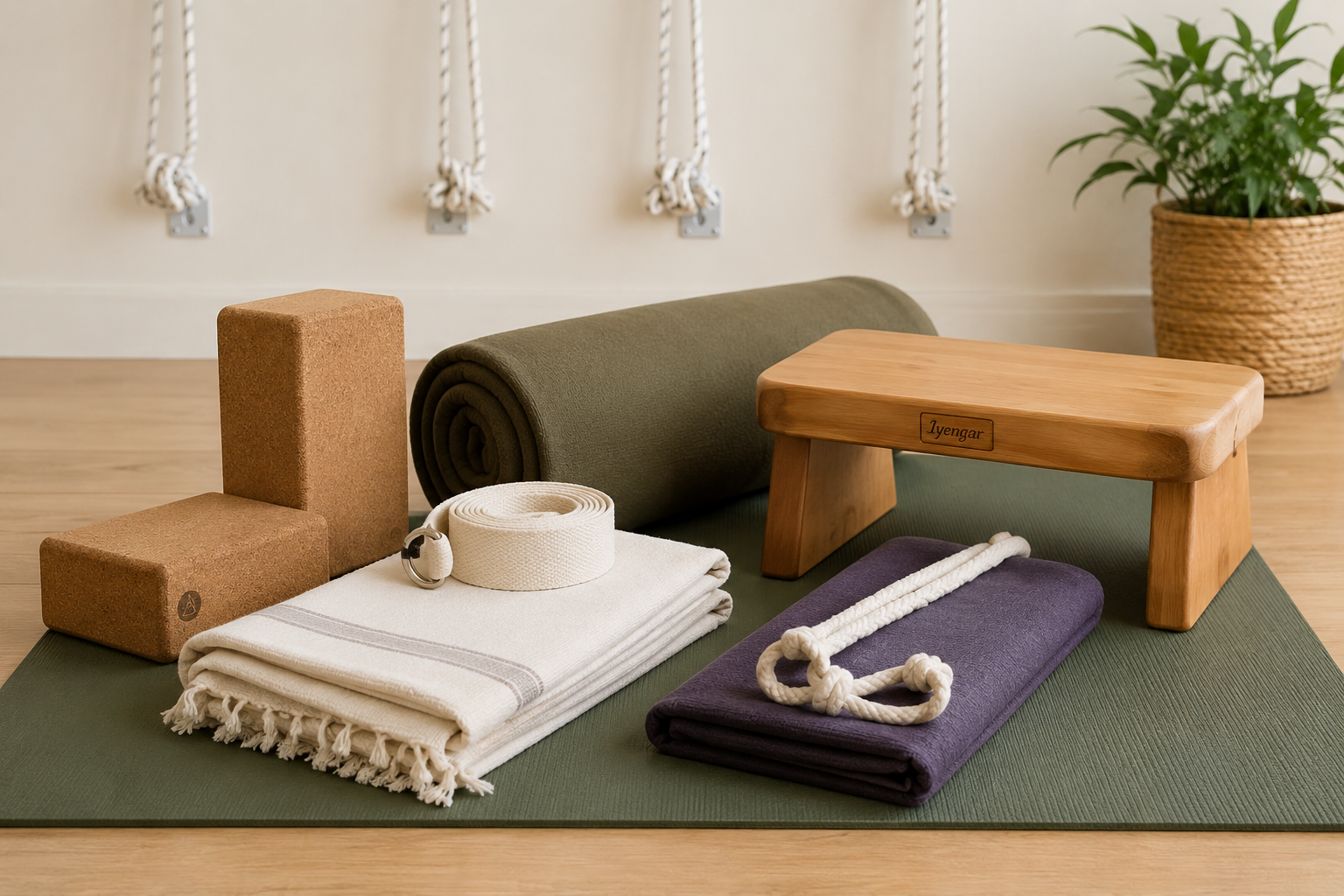
Yoga props used during Iyengar Yoga practice.
Some characteristics of Iyengar Yoga include:
01
Correct alignment
02
Precise movements
03
Use of yoga props
04
Step-by-step learning
05
Body awareness
06
Progressive practice
Starting Your Practice
Is Iyengar Yoga Suitable for Beginners?
Yes. Beginners can explore Iyengar Yoga with guidance from an experienced instructor.
You do not need to be highly flexible or have previous yoga experience to begin. An introductory class can help you understand basic postures, alignment and how different props can support your practice.
The focus is not simply on how flexible you are. Instead, students are encouraged to learn how to practise with greater awareness and understanding.
Inside the Class
What Can You Expect in an Iyengar Yoga Class?
During an Iyengar Yoga class, the instructor guides students through different yoga postures and explains how to position and align the body.
Students may also learn how to use different yoga props to support their practice. The pace of the class allows students to focus on each posture rather than simply moving quickly from one pose to another.
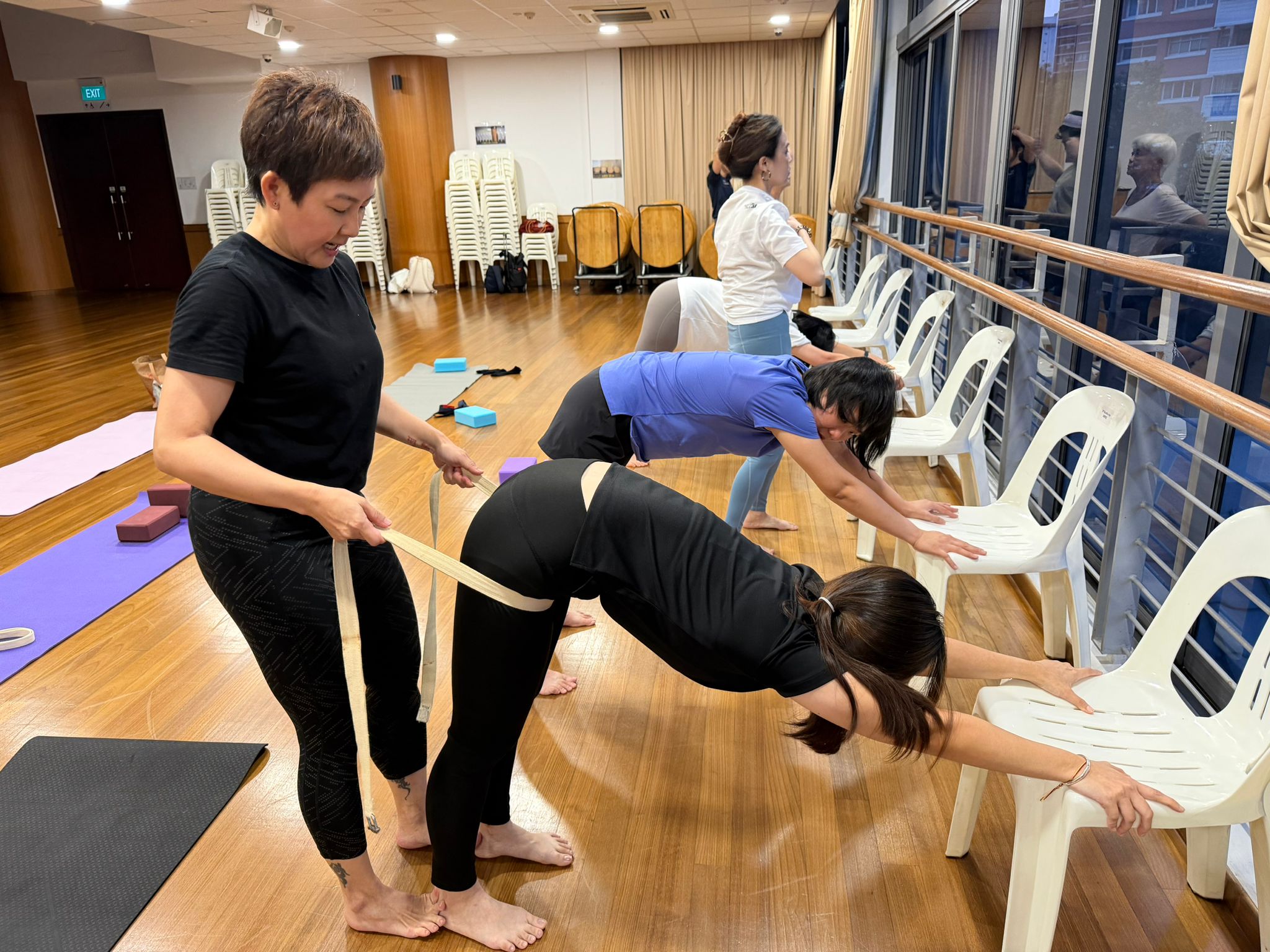
A glimpse of an Iyengar Yoga class at Continuing Education Centre.
Common Questions
Frequently Asked Questions
Do I need previous yoga experience?
No. Beginners can start with an introductory class and learn the basic principles step by step.
Do I need to be flexible?
No. Flexibility is not a requirement for starting yoga. The practice focuses on learning and developing greater awareness of your body and movement.
What should I wear to an Iyengar Yoga class?
Wear comfortable clothing that allows you to move freely during the class.
Join an introductory class and discover a mindful and structured approach to yoga.